Halfway Through and Completely Over It — So Why Can't I Just Stop Watching?
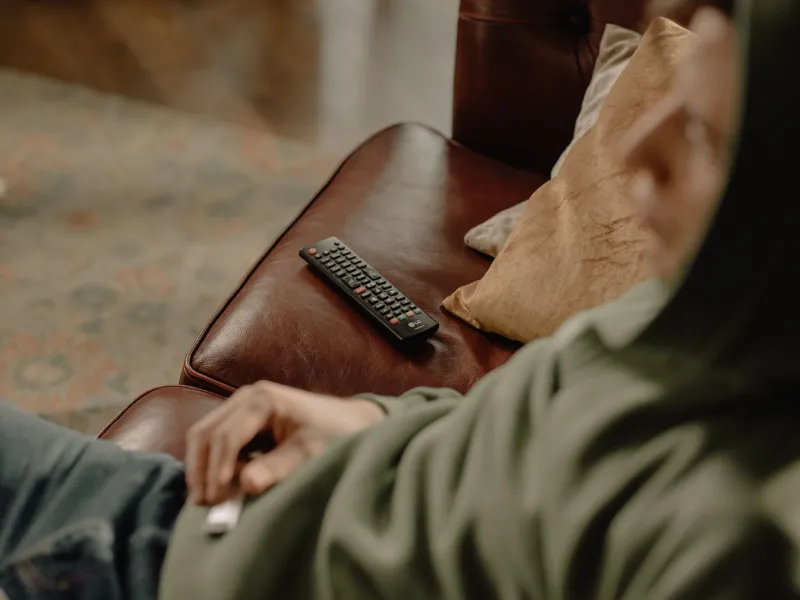
Somewhere around episode five, I knew. The writing had gone sideways, the character I actually liked had been sidelined for a subplot I did not care about, and I was checking my phone every twelve minutes. Classic signs. The kind of viewing experience where you're technically watching but mostly just present in the same room as a television.
And yet. I kept going.
Eight episodes in — eight — I finally said it out loud: I don't even like this show anymore. My roommate looked up from her book, shrugged, and went back to reading. A normal, reasonable response. The abnormal, unreasonable thing was that I then watched two more episodes before bed.
So I decided to actually try quitting. Cold turkey. Mid-season. And I want to tell you it was easy, because that would make for a cleaner story. It was not easy. It was deeply, embarrassingly not easy.
The Sunk Cost Has a Grip Like You Wouldn't Believe
Here's the first thing that happened when I closed the app and told myself I was done: my brain immediately started doing math.
You've already put in six hours. Six hours. You're going to waste six hours?
Which is, of course, completely backwards logic. The six hours are gone regardless. Watching four more episodes doesn't recover them — it just adds more time to the loss column. Every economist who's ever written about sunk cost fallacy would have a field day with my streaming habits. And yet the math felt real. It felt like quitting would somehow retroactively ruin the first six hours, like the only way to make them count was to see the whole thing through.
I've heard people describe this same feeling about bad relationships, terrible road trips, and restaurants they've already paid for but clearly shouldn't finish. The brain doesn't like waste. Even when continuing is the waste.
The Spoiler Anxiety Is a Whole Separate Problem
Once I'd talked myself down from the sunk cost spiral, something else moved in to take its place: spoiler dread.
This show — I'm not naming it, you've probably seen it, it's fine, it's whatever — is the kind of thing people talk about. Not obsessively, not in the way that great television gets discussed, but casually. In passing. In the group chat. In the comments of completely unrelated posts because the internet has no chill.
The moment I stopped watching, I became vulnerable. I was now a person who hadn't seen the thing that people were referencing. And while I genuinely did not care about the plot anymore, I also did not want to be caught off guard by a spoiler for a show I was theoretically still watching. That's a weird middle ground to occupy. You're not invested, but you're not out either. You're just... hovering.
So I kept watching partly to protect myself from information about a story I no longer cared about. Read that sentence again. That is what I was doing with my evenings.
Completion as a Personality Trait We Never Agreed To
There's something else underneath all of this, and it took me a few days of actual reflection to name it. Finishing things feels like a virtue. Not finishing things feels like a character flaw.
I don't know exactly when that got wired in — probably somewhere between elementary school book reports and the cultural mythology of people who follow through — but it's in there. Quitting a show midseason, even a show you've outgrown, even a show that's wasting your time, registers somewhere in the brain as giving up. And giving up is bad. Giving up means you're not someone who finishes what they start.
Never mind that the show is not a commitment. Nobody is grading this. There is no certificate of completion. The streaming service will not send a disappointed email. And yet.
I've talked to enough people about this — casually, in the way you do when you're writing about something and need to confirm you're not completely alone — and the response is always some version of oh god, yes, same. We are all, apparently, sitting through television we've mentally checked out of because we've confused endurance with integrity.
What Actually Happened When I Made Myself Stop
I did eventually quit the show. For real, not just in theory. I deleted it from my continue-watching list, which felt weirdly ceremonial, and I spent the next couple of nights reading instead.
The first night, I kept thinking about it. Not because I missed it — I want to be very clear that I did not miss it — but because the habit loop was still running. Eight o'clock came around and my brain was like, okay, couch, show, go. The absence of the thing created a small but noticeable friction.
By night three, it was mostly gone. By the end of the week, I genuinely couldn't remember what episode I'd left off on, which told me everything I needed to know about how invested I'd actually been.
A week after that, someone mentioned the show in passing. I said I'd stopped watching it. They said, oh, did you see the thing that happened in the finale? I said I hadn't. They told me anyway. I felt nothing. Not even a flicker.
Six hours. I'd been protecting six hours of context for a finale reveal that produced zero emotional response.
The Permission Slip You Didn't Know You Needed
I'm not going to pretend I've fully fixed this. There's another show in my queue right now that I'm maybe 60% done with and maybe 40% interested in. The completion instinct is still there, doing its thing, making its case.
But I think about that finale spoiler a lot. The total flatness of it. The confirmation that my investment had already left the building well before I did.
Somewhere along the way, we started treating our watch lists like obligations. Like the shows we've started are owed our time just because we started them. And I get it — the cultural conversation moves fast, the algorithm rewards currency, and nobody wants to be the person who bounced on something before it got good.
But here's what I keep coming back to: your attention is the actual thing of value here. Not the show. Not the completion streak. Not your ability to participate in a conversation about a season finale you sat through out of habit.
You're allowed to stop. Midseason, mid-episode, mid-scene if you want. The show will be fine. It won't even notice.
Your couch, on the other hand, has seen enough.