Going in Blind: What Happens When You Actually Watch TV Without Doing Homework First
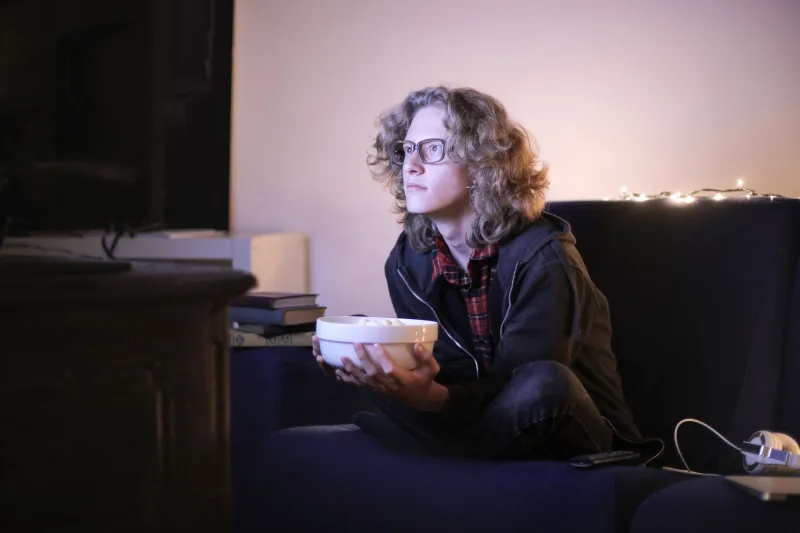
I used to just... watch things. You'd flip to a channel, something would be on, and you'd either stay or you'd leave. No prep work. No pre-game analysis. No consulting a subreddit to find out if the show "gets good" by episode four or if the ending is going to ruin your entire investment.
That era feels very far away now.
Somewhere in the last decade or so, watching TV became a two-part process — and honestly, part one (the research) started eating part two (the actual watching) for breakfast. I noticed this happening to me slowly, then all at once. I'd spend forty-five minutes reading reviews, scrolling Reddit threads, and watching YouTube explainers before pressing play on something. By the time I actually started the episode, I already knew the major plot beats, the fan theories, which characters were underwritten, and whether the showrunner had "done the work" on whatever thematic element critics were currently grading TV on.
So I decided to stop. Cold turkey. No research, no previews, no "is it worth it" takes from strangers on the internet. Just me, the remote, and whatever the algorithm decided to surface. Completely blind.
The results were uncomfortable in ways I did not anticipate.
The First Night Was Genuinely Disorienting
I picked a show I'd been vaguely aware of — one of those prestige dramas that kept showing up in my recommendations but that I'd never gotten around to because I was always waiting to feel "ready." Usually "ready" meant I'd done enough background reading to feel like I understood the cultural conversation around it before joining.
This time I just hit play.
The first episode was slow. Like, really slow. And because I hadn't read anything, I didn't know if that was intentional atmosphere-building or just bad pacing. I didn't know if the character I found annoying was supposed to be annoying or if I was missing something. I sat with a low, persistent hum of uncertainty the entire time. It wasn't unpleasant exactly — but it wasn't comfortable either.
I kept reaching for my phone. Not to scroll mindlessly, but specifically to Google the show. To check. To verify. To make sure I was having the right experience.
I put the phone face-down and kept watching.
The FOMO Is Real and It's Structural
Here's the thing nobody really talks about: the anxiety of going in blind isn't just about spoilers. It's about feeling like you're watching the wrong version of something.
Modern prestige TV — and really most prestige media — arrives with a whole ecosystem attached. There's the show itself, and then there's the discourse layer on top of it. The Reddit threads breaking down the symbolism. The recap newsletters that tell you what you should have noticed. The Twitter (fine, X) threads from people who've already watched the whole season and are being very careful about what they say but clearly have feelings. The YouTube video essays that reframe the entire first season through the lens of the finale.
When you go in blind, you're opting out of that layer entirely. And it turns out that layer has quietly become part of the experience for a lot of us. Not a supplement — the actual thing.
I felt like I was watching a movie without the soundtrack. The show was there. But the context that usually surrounds it, that gives it weight and significance before you've even formed your own opinion — that was missing. And I missed it.
By Episode Three, Something Shifted
I stuck with the blind experiment. Three episodes in, something changed.
I started actually paying attention differently. Without knowing what the "important" scenes were supposed to be, I was watching everything with equal weight. A throwaway conversation in episode two that I might have mentally filed as filler — because some recap told me the real action doesn't start until episode four — turned out to be the thing I kept thinking about afterward. A character I'd have probably written off based on a Reddit comment ended up being the most interesting person on screen to me.
I was forming actual opinions. Mine. Uncontaminated.
It felt strange. A little lonely, honestly — there's a real social component to the shared discourse that I hadn't fully appreciated. But also kind of electric in a way I hadn't felt about TV in a while.
We've Outsourced Our First Impressions
This is the part that's been sitting with me since I ran this little experiment: we've collectively decided that other people's frameworks for a piece of art are more trustworthy than our own initial reactions.
And I get it. There's a lot of content. Time is finite. Nobody wants to invest eight hours in something that doesn't deliver. The pre-vetting process makes practical sense. But somewhere in optimizing for efficiency, we started treating the experience of discovery — genuine, unfiltered, first-contact discovery — as a problem to be solved rather than a feature to be protected.
The research-before-watching habit is also, if we're being honest, a little bit about status. Knowing the context. Being conversant. Not showing up to the metaphorical watercooler without having done the reading. TV has become homework, and the reviews and Reddit threads are the SparkNotes.
So Is Ignorance Actually Bliss?
Kind of? But not in a simple way.
Going in blind made me a more present, more genuinely engaged viewer. I noticed more. I felt more. My reactions were actually mine. When something surprised me, it surprised me — not in the "oh interesting, they went a different direction than the fan theory predicted" way, but in the old-fashioned, stomach-dropping, what-just-happened way.
But I also missed the community of it. The shared conversation. The sense that watching something is an act of participation in a larger cultural moment, not just a private experience in your living room.
Maybe the answer isn't to fully abandon the research habit — but to at least flip the order. Watch first. Form your own read. Then go see what everyone else thinks. Use the discourse as a conversation partner rather than a prerequisite.
I'm trying that now. It requires actual discipline, which is annoying. But the payoff — having a genuine opinion before someone else's opinion colonizes your brain — turns out to be worth more than I remembered.
The show, by the way? Really good. Would have liked it less if I'd read about it first. I'm almost certain of it.