So I Swapped My Phone for a Notebook. Turns Out the Spiral Never Stops.
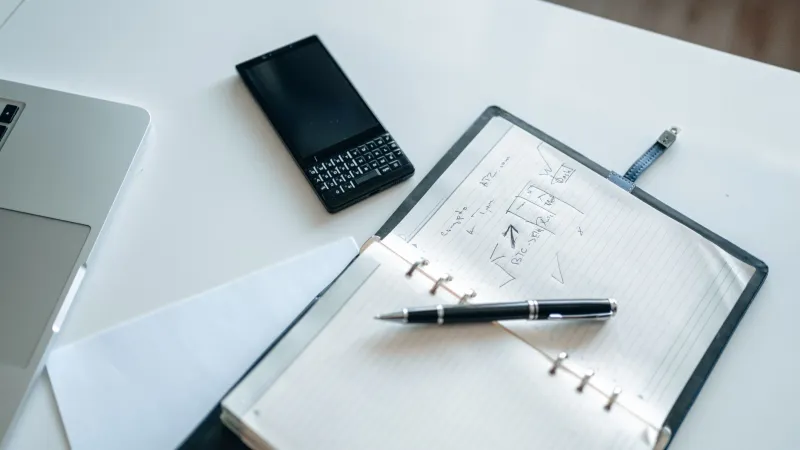
It started, like most of my bad ideas, with a sense of moral clarity at 11 p.m. I was lying in bed, phone six inches from my face, reading takes about things I had no control over, written by people I'd never meet, about events that had already happened. Classic doomscroll. The usual.
Somewhere around the fourth article about a geopolitical situation I couldn't locate on a map, I put the phone down and thought: what if I just... didn't do this anymore? What if, instead of absorbing the internet's anxious stream of consciousness, I wrote in a notebook like a person who had their life together? What if I went analog?
I bought a new journal the next morning. Felt very virtuous about it.
The First Few Days Felt Like a Detox Commercial
I'm not going to lie — the first couple of days had a real "wellness influencer" energy to them. I'd reach for my phone, catch myself, and pick up the notebook instead. I wrote morning pages. I made lists. I did little drawings in the margins. I felt like someone who drinks herbal tea by choice and means it.
The urge to scroll didn't disappear, but it felt manageable. Redirectable. Like I'd successfully installed a detour on a mental highway that previously only led to one place: bad news, served hot, infinite scroll.
I told a friend about it. She said, "That's so healthy." I agreed, probably too enthusiastically.
Then I looked down at what I'd actually written.
Page Four Is Where Things Got Weird
Here's what I noticed by day four: my journal was becoming its own kind of feed. Not in a social media sense, but in the sense that I was compulsively filling it. Lists of things I was worried about. Observations about current events, handwritten, like I was a 19th-century pamphleteer. Half-formed thoughts that I kept returning to and annotating, drawing little arrows between entries, cross-referencing pages.
I'd basically built a personal doomscroll. Offline. In cursive.
The content had changed — it was my own thoughts instead of other people's hot takes — but the behavior was identical. The restless reaching. The need to capture, catalog, process, react. I wasn't consuming the internet's anxiety anymore. I was just producing my own.
Which, honestly, might be worse? At least the internet occasionally has funny videos.
What the Notebook Actually Revealed
Here's the thing nobody tells you about going analog as a cure for compulsive scrolling: the medium isn't really the problem. That sounds obvious in retrospect, but it genuinely surprised me when I felt it firsthand.
Doomscrolling isn't about phones. It's about a specific psychological itch — the need to feel informed, to feel like you're tracking something, to stay ahead of whatever invisible threat your nervous system has decided is coming. The phone is just the most efficient scratch available. But scratch that itch with a pen and paper, and the itch doesn't go away. You just have worse handwriting.
I started reading about this a little (on my phone, which felt ironic but whatever). There's a decent amount of research suggesting that the compulsion to seek and consume information is genuinely hard-wired, something that probably served our ancestors really well when "staying informed" meant knowing where the predators were. In 2024, it means reading seventeen articles about a thing you can't change and then lying awake at 1 a.m. feeling vaguely terrible.
The notebook didn't fix that. It just gave the compulsion a different costume.
The Part Where I Got a Little Honest With Myself
Around day ten, I sat down to write and realized I was dreading it. Not because journaling is bad — it genuinely isn't, and I do think there's something valuable about the slower pace of handwriting, the way it forces you to complete a thought before starting the next one. But I'd turned it into another obligation. Another thing to fill. Another place to put my anxiety so it felt like I was doing something with it.
I'd replaced passive consumption with active production and called it healing. But the underlying restlessness was still there, totally intact, just wearing a linen aesthetic.
This is the part of the wellness experiment that the Instagram posts never really cover: sometimes the "healthier" habit is just the same habit with better PR.
What Actually Helped (A Little)
I didn't quit the notebook. I do still write in it, most mornings, and it genuinely helps me think. But I changed what I was using it for. Less anxious cataloging of everything I needed to process. More actual reflection — slow, incomplete, not trying to arrive anywhere.
I also got a lot more intentional about why I was picking up my phone. Not a screen time app, not a strict schedule — just a one-second pause before opening anything. Do I actually want to read this, or am I just reaching for something because sitting still feels unbearable right now?
Spoiler: it's usually the second thing. And naming it doesn't make the urge disappear, but it does make it feel less automatic. Less like a reflex, more like a choice I'm making and can therefore unmake.
The notebook helped me see that, weirdly. Not because it replaced the scroll, but because it mirrored it back to me in my own handwriting.
So: Does Going Analog Actually Work?
Depends what you mean by "work." If you mean does it eliminate the compulsive need to consume and document and track — no. Not even close. The compulsion is the point. The compulsion is the thing you have to look at.
If you mean does it slow things down enough that you can actually notice what you're doing — maybe. A little. Under the right circumstances, with the right expectations.
My notebook is currently sitting on my desk with about sixty pages filled. Some of it is genuinely useful. Some of it is just doomscrolling in longhand. The difference, I've decided, is whether I'm writing to think or writing to avoid thinking.
I still pick up my phone too much. I still read things I don't need to read at hours I shouldn't be awake. But now I also have a journal, and sometimes I write in it, and occasionally it helps.
Progress, I guess. Slow, analog, slightly spiral-bound progress.