Down the Rabbit Hole: The Wildly Specific Internet Communities I Never Knew Existed Until the Algorithm Showed Me
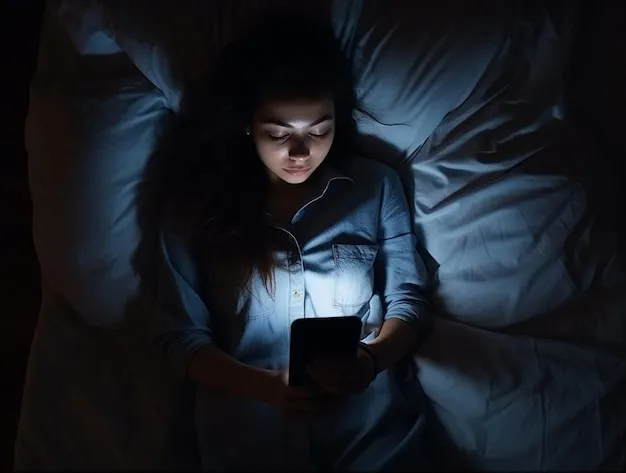
Photo: person on phone late night scrolling social media glowing screen dark room, via img.freepik.com
It started, as most things do now, with a completely unintentional scroll.
I was on my phone at 11pm doing the thing where you're not really looking for anything but you're not ready to put it down either — the classic doom-scroll, the digital equivalent of staring into the fridge. And then something strange happened. The algorithm, which I'd been feeding for years with my very normal interests, suddenly served me a video about people who collect antique fishing lures competitively.
Not fishing. Not antiques broadly. Specifically vintage fishing lures, and the community of people who find, grade, trade, and apparently feel very deeply about them.
I watched for twenty-two minutes. I don't fish. I have never fished. I have no plans to fish.
And then I kept going.
The Map Nobody Prints
What I discovered over the next few weeks of semi-intentional exploration is that the internet we talk about publicly — the trending topics, the viral moments, the stuff that makes it to morning news segments — is basically the lobby. Most of what's actually happening online is happening in rooms that mainstream culture never peeks into.
These aren't secret communities. They're just... specific. Hyper-specific in a way that makes them invisible unless you're looking for them, or unless a bored algorithm decides you might be interested.
Here's a partial map of what I found:
The Vintage Menu People. There's a community — spread across subreddits, Facebook groups, and Instagram accounts — entirely devoted to collecting, scanning, and discussing old restaurant menus. Not for historical research necessarily. Just because they love them. They love the fonts. They love the prices. They love the dishes that no longer exist and the restaurants that are long gone. One guy posted a menu from a Howard Johnson's in 1974 and the comment section went absolutely feral.
Competitive Houseplant Growers. I knew plant people were a thing. I did not know there were people who enter their houseplants in informal online competitions, with judges and categories and spirited debates about what constitutes a fair showing for a variegated Monstera. The discourse is real.
The Rain Roof TikTok Hole. Somehow I ended up in a corner of TikTok where creators post recordings of rain hitting different surfaces — tin roofs, canvas tents, old wooden porches, car hoods. No talking. Just rain sounds, labeled by material and location. The comment sections are peaceful in a way the rest of the internet is not. People say things like "this one got me through a hard week" with complete sincerity.
Abandoned Mall Documentarians. There's a whole subculture dedicated to photographing and documenting dying and dead American malls. They go in, they shoot the empty Sunglass Huts and the ghost food courts, and they post it. The community around this is huge, and the emotional tenor of it is fascinating — part nostalgia, part grief, part genuine architectural interest.
What the Algorithm Is Actually Doing
The thing about these communities is that they didn't form because of an algorithm. They formed because humans are genuinely, wonderfully specific in their interests, and the internet gave those specific people a place to find each other. The algorithm just surfaces them to the rest of us occasionally, usually by accident.
But when it does, it's revealing something important: there is no such thing as a niche interest anymore in terms of being alone in it. Whatever extremely particular thing you care about, there are other people who care about it too. Probably a lot of them. Probably with their own terminology and drama and inside jokes.
This is either heartwarming or slightly destabilizing depending on your mood.
The Fandom Question
I kept thinking about what "fandom" even means in this context. We usually use the word for big things — sports teams, musicians, TV shows, franchises. But what I was seeing was fandom in its purest, most stripped-down form. People who love something specific enough to organize around it, create content about it, and seek out others who feel the same way.
The fishing lure guys are fans. The menu collectors are fans. The rain roof TikTokers are fans of a particular kind of quiet.
And there's something genuinely moving about that when you sit with it. These are people who found the thing that does it for them — not the thing they were told to like, not the culturally legible thing, but their actual thing — and then went looking for their people.
What It Says About Free Time
Here's the observation that's been rattling around in my head since I went down this rabbit hole: the existence of these communities is basically a document of how Americans actually spend their free time, as opposed to how we say we spend it.
We say we're watching prestige TV and reading books and going to museums. And maybe we are. But we're also, apparently, deeply invested in the grading system for a 1952 Heddon Crazy Crawler lure. We're recording rain on our porch and posting it for strangers. We're driving to the Carousel Mall in Syracuse to photograph the empty storefronts before they tear it down.
The stuff that makes it onto the cultural main stage is often the stuff that was designed to be there. These communities are what happens when people just... follow their actual interests wherever they go.
The Log
I don't have a tidy conclusion here. I didn't join any of these communities. I'm not about to start collecting menus. But spending time in these corners of the internet did something to how I think about online culture.
The internet is so much bigger and stranger and more human than the version of it that trends. There are entire parallel worlds running alongside the one we usually see, full of people who found their thing and built something around it.
That feels worth knowing. Even if I found it by accident at 11pm on a Tuesday, looking for nothing in particular.