I Tried to Feed My Brain Only Good News. My Feed Had a Different Agenda.
It started, like most of my questionable decisions, at 11:30 on a Tuesday night.
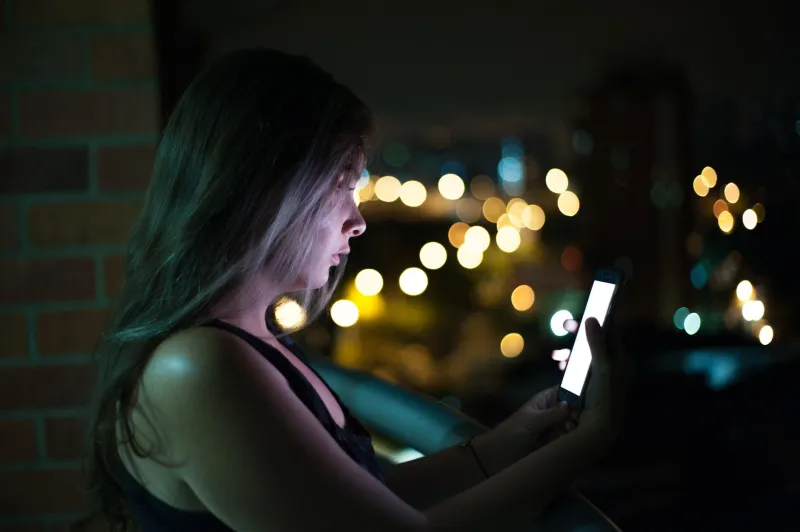
I was lying in bed, phone six inches from my face, reading about something awful I had absolutely no power to change, feeling the specific kind of hollow dread that only exists in that exact posture. You know the one. And I thought: what if I just... didn't do this anymore?
Not quit social media entirely. I've tried that. It lasted four days and mostly I just moved the doomscrolling to news websites instead. No, this time I had a plan. A curated, intentional, algorithmically-outsmarted plan. I was going to follow only good news accounts. Uplifting stories. Dogs being rescued. Scientists making small breakthroughs. Communities coming together. The stuff that makes you feel like humanity might be okay, actually.
Three weeks later, I have a report. The verdict is not great.
The Setup
I went in with real commitment. On Instagram, I unfollowed every account that had posted anything remotely anxiety-inducing in the last month. That turned out to be... most of them. I replaced them with accounts dedicated to feel-good journalism, nature photography, community interest stories, and a couple of those pages that just post videos of unlikely animal friendships. You've seen those. A dog and a duck becoming best friends. A crow who visits the same window every morning. That kind of thing.
On Twitter — sorry, X, whatever — I muted keywords aggressively. Whole categories of topics just gone. I followed accounts that post about local heroes, scientific discoveries, and the occasional thread about someone's grandmother doing something unexpectedly cool.
For the first two days, it genuinely worked. My scrolling sessions felt lighter. I'd put the phone down without that low-grade background hum of existential noise. I told a friend about it. She seemed skeptical. I was not skeptical. I was optimistic in a way that, in hindsight, should have been a warning sign.
When the Algorithm Started Getting Curious
Here's the thing about recommendation systems: they are not your therapist. They are not trying to help you feel better. They are trying to keep you on the app longer, and they are very, very good at figuring out what does that.
By day five, Instagram's suggested content started doing something interesting. It wasn't showing me outright bad news. It was showing me contrast. A feel-good story about a neighborhood that came together after a disaster. A heartwarming update that began with a pretty bleak situation. Slowly, incrementally, the darkness started creeping back in through the frame of the uplifting content itself.
The good news accounts, it turned out, often need a bad situation to resolve. That's the structure of the story. Something was broken. Now it's fixed. Someone was struggling. Now they're okay. You can't have the wholesome without the setup, and the setup is frequently grim.
By week two, my feed was probably 40% genuinely uplifting content and 60% content that was technically positive in conclusion but required absorbing something upsetting to get there. The algorithm had found a loophole in my own rules.
The Brain Problem Nobody Wants to Talk About
But here's the part I really didn't want to admit: even when the feed was clean, I kept going looking for the edge.
I'd finish the duck video and find myself tapping into the comments, where someone had inevitably started an argument about something completely unrelated. I'd read a story about a teacher who did something wonderful and then scroll down to find the one reply calling it performative. I was doing it to myself. The algorithm didn't make me do that part.
There's a concept called negativity bias that psychologists have been writing about for decades — the idea that our brains weight negative information more heavily than positive information as a survival mechanism. Bad news historically meant something was trying to eat you. Good news meant nothing was currently trying to eat you, which is nice but not urgent. So our attention naturally gravitates toward threat.
Social media platforms didn't create this. They just built a monetization engine around it. The feed that makes you feel the most is the feed that keeps you scrolling, and the content that makes you feel the most tends to be the content that activates that ancient, wary part of your brain.
You can curate your follows all you want. The architecture is still designed around your worst instincts.
What Actually Happened by Week Three
By the final stretch of my experiment, I noticed something almost funny: I had started to find the good news accounts slightly exhausting in their own way.
There's a particular tone that a lot of feel-good content adopts — breathless, a little saccharine, with the emotional beats telegraphed from a mile away. You won't believe what this community did. This dog waited at the shelter for two years. What happened next will restore your faith. It started to feel like being aggressively reassured by someone who's trying a little too hard. Which is its own kind of stressful.
I also realized I'd developed a new anxiety I hadn't had before: the anxiety of missing something important because I'd muted it. What if something genuinely significant happened and I didn't know because I'd curated myself into a bubble? That particular flavor of FOMO — the responsible kind, if you can call it that — crept in quietly and made itself comfortable.
So Where Does That Leave Us
I'm not going to tell you the experiment was a total failure, because that's not quite true either. The first few days genuinely were better. The habit of intentionally choosing what you follow, rather than just passively accumulating accounts over years, is worth doing regardless of what you choose. I found a few accounts I genuinely like and still follow. The crow window one is staying.
But the idea that you can hack your way to a healthy relationship with social media through curation alone? I don't buy it anymore. The platform's incentives and your brain's wiring are working against you from two different directions simultaneously, and a carefully selected list of wholesome accounts is a pretty thin line of defense against both.
Maybe the more honest version of digital wellness isn't finding the right content. Maybe it's just spending less time in the machine altogether — which, I know, is not a revolutionary insight. People have been saying it for years. I just had to run a three-week experiment to believe them.
The crow still visits the window every morning, by the way. I'm choosing to take that as a sign that something is okay.